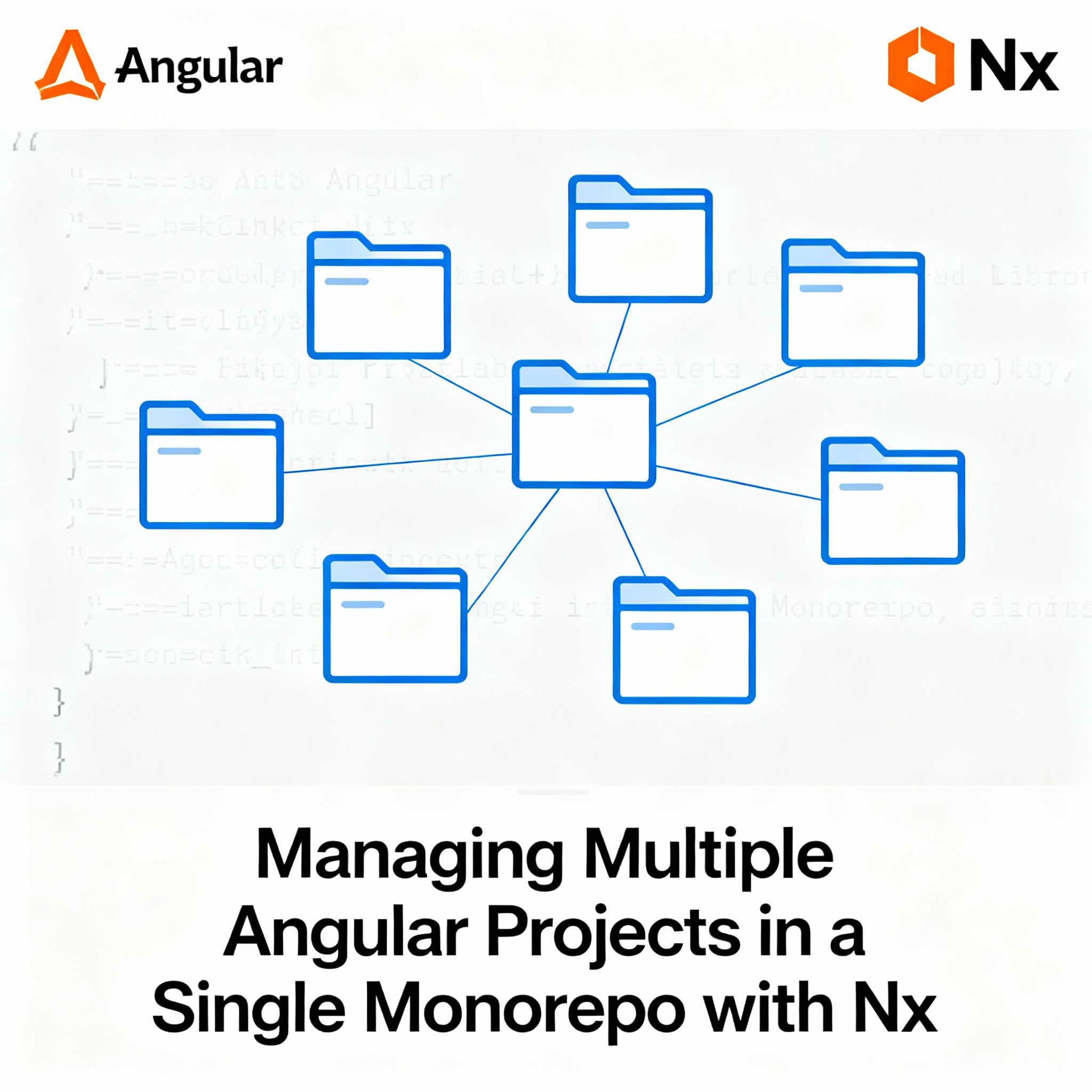
As Angular applications grow in complexity, managing multiple projects, shared libraries, and build configurations can become challenging. Monorepos, combined with a robust build system like Nx, provide an effective solution for building scalable and maintainable Angular ecosystems.
What is a Monorepo?
A monorepo is a single repository containing multiple distinct projects, often with shared code and tooling. This contrasts with a polyrepo setup, where each project resides in its own repository.
Benefits of Monorepos:
- Code Sharing: Easier to share code and logic between projects.Atomic Changes: Changes affecting multiple projects can be committed in a single transaction.
- Consistent Tooling: Standardized build, test, and linting configurations.
- Simplified Dependency Management: Easier to manage versions of shared libraries.
Introducing Nx (Nrwl Extensions)
Nx is a powerful open-source build system that extends the Angular CLI to support monorepos. It provides advanced features like:
- Code Generation: Schematics for creating applications, libraries, and components.
- Affected Commands: Run commands only on projects affected by a change.
- Computation Caching: Speeds up builds and tests by caching results.
- Dependency Graph: Visualizes project dependencies.
Setting up an Nx Workspace:
npx create-nx-workspace@latest my-angular-monorepo --preset=angular
cd my-angular-monorepo

# Generate a new application
nx g @angular/cli:app my-new-app

# Generate a shared library
nx g @nrwl/angular:lib shared-ui
Using Affected Commands:
After making changes, you can run tests only on affected projects:
nx affected:test
nx affected:build
Conclusion
Monorepos with Nx provide a robust and efficient way to manage complex Angular applications. By centralizing code, tooling, and dependencies, you can improve developer productivity, ensure consistency, and build highly scalable frontend solutions.
Comments
Leave a comment
No comments yet. Be the first to share your thoughts!